
|
REGENERATIVE BURNERS WITH DIRECT IGNITION |
|||||||||||||||||||||||
|
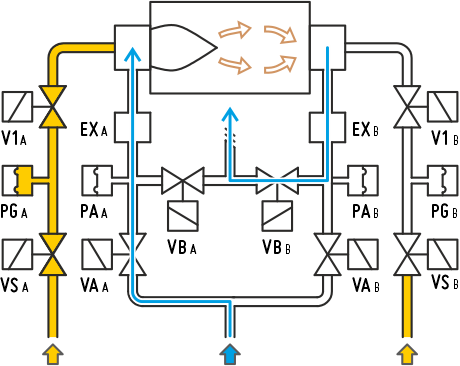
Two identical devices control two burners which work in a common combustion chamber, each burner is equipped with a heat retainer (alumina ball or honeycomb) which accumulates heat in the passive phase because it is crossed by the hot exhaust gases which are vented through the VB valve which is active with the burner off. An external logic switches the burners on and off alternately (via fieldbus or electric control) so that the active one receives preheated air from passing through the heat retainer. Reversing period is generally between 30 and 300 seconds. Flameless mode can be activated when the combustion chamber temperature exceeds the auto-ignition threshold. |
|||||||||||||||||||||||
|
|
|
|
|||||||||||||||||||||
|
|
|||||||||||||||||||||||
|
|||||||||||||||||||||||
|
|
|||||||||||||||||||||||



|
REGENERATIVE BURNERS WITH CONTINUOUS PILOT |
||||||||||||||||||||||||||
|
When frequent reversals occur between the two burners, configurations with a permanent pilot flame are preferred. In the application shown, the pilot burners are activated after the completion of the independent tightness test for each burner (where applicable). The ignition management of the main burners (equipped with regenerators) is handled via an electrical signal (Qio) or fieldbus (TraxBus or Profinet). The control logic operates by switching between the following stages:
|
||||||||||||||||||||||||||
|
|
|
|
||||||||||||||||||||||||
|
|
||||||||||||||||||||||||||
|
||||||||||||||||||||||||||
|
|
||||||||||||||||||||||||||
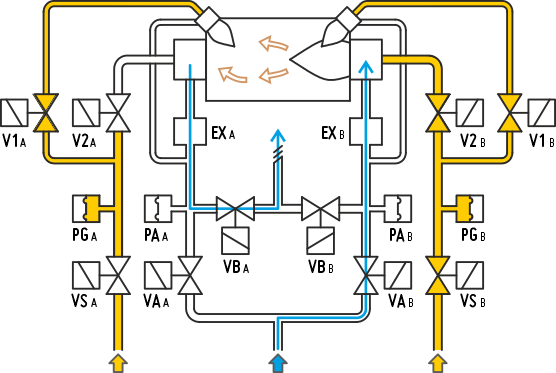
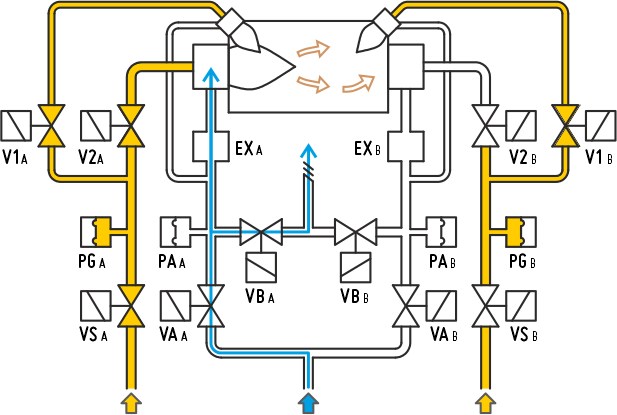


Low Temperature with direct flame monitoring: switching between Stage 2 (pilot only) and Stage 3 (pilot + main burner)